Physical AI for Automated Kitting
Production-ready Physical AI that picks, sorts, and places diverse parts into complete kits. Easy workflow set up. For new and changing parts or recipes.
SEE ALL USE CASES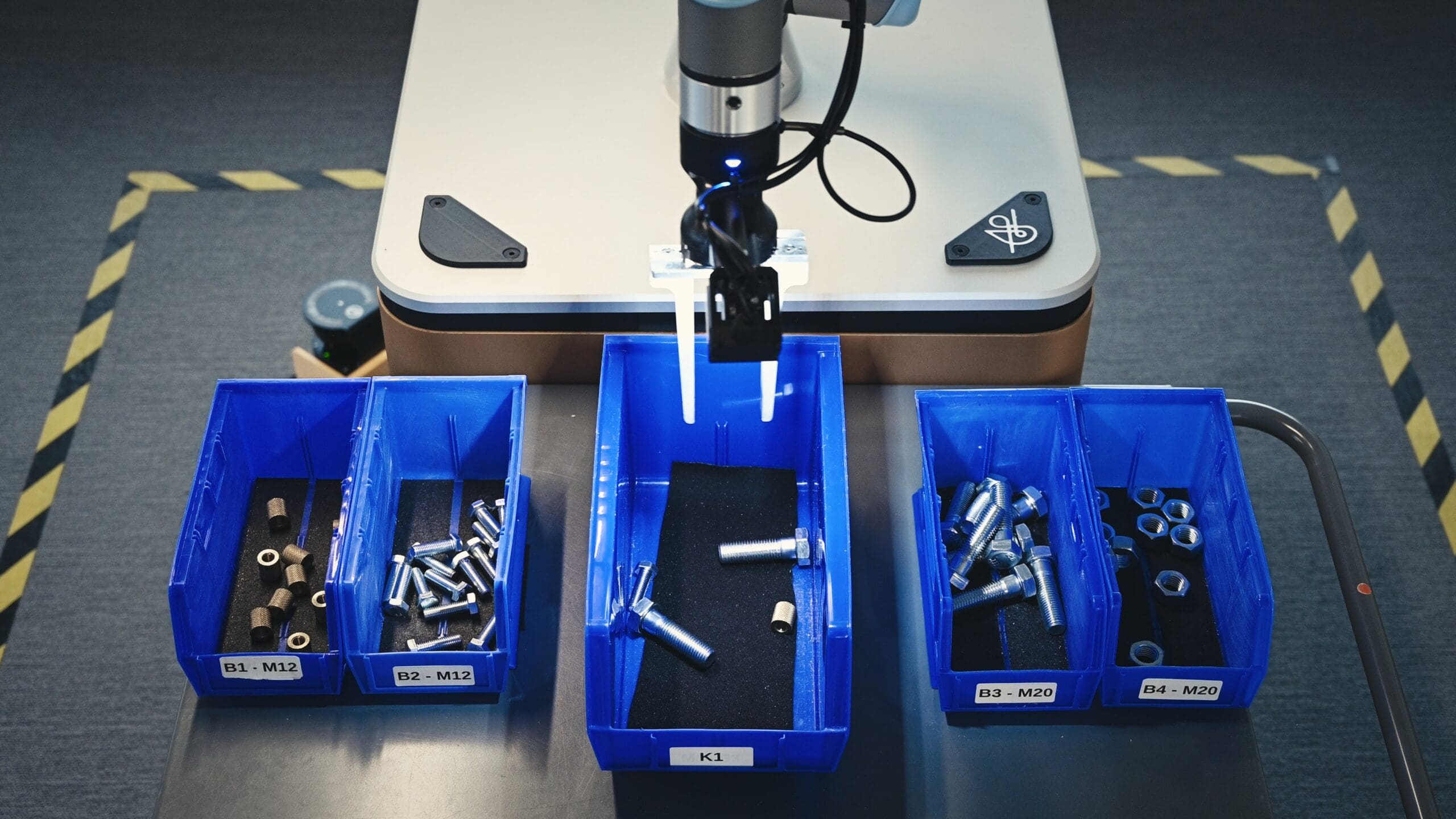
Kitting Breaks Traditional Automation
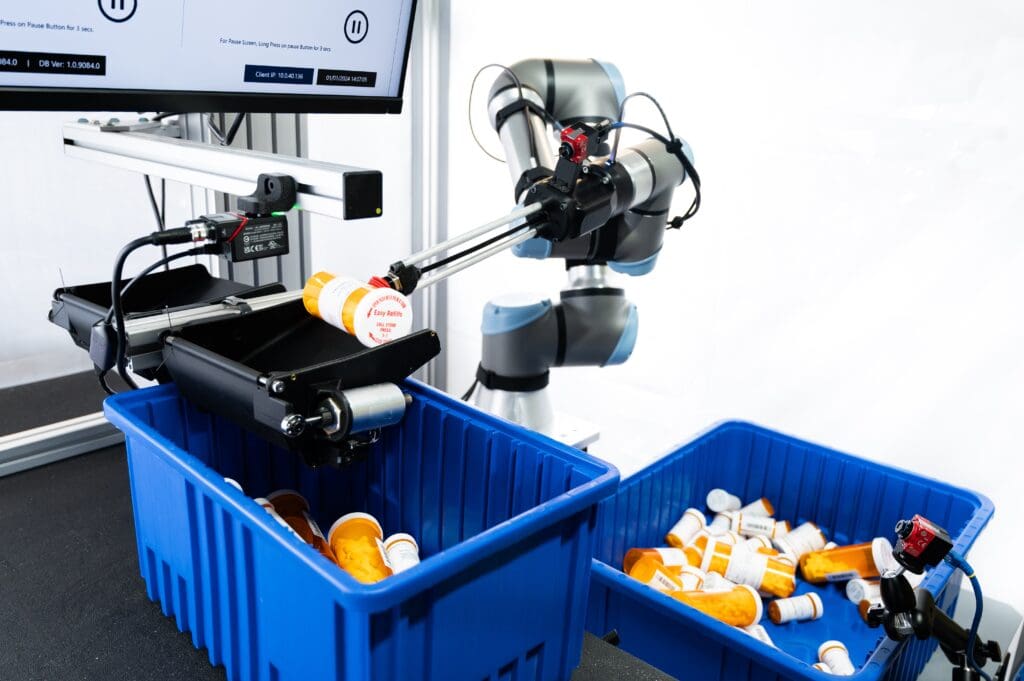
Kitting is a high-volume, medium-mix pick-and-place task where parts and recipes constantly change.
Every item requires precise placement in the right compartment, orientation, and quantity, while repetitive, hard-to-staff labor can lead to errors, downstream defects, and stoppages.
Built for the Kits You Run Today
Line-side kitting and sequencing, e-commerce and retail bundling, MRO and spare-parts kits, medical and procedure trays, and electronics component kitting.
Accuracy that protects the line. Right items, right count, right compartment.
Consistent throughput. Policies hold cycle times at line speed, shift after shift.
Easy to change recipes. Add new BOMs and kit variants without re-engineering the cell.
Scales with you. Replicate proven tasks across stations and sites.
Contact Us Today
Tell us about your kits and your constraints. Our team will map the fastest path to a production-ready task you can replicate across operation.
"*" indicates required fields
FAQ
Automated kitting uses robotics and automation to pick, sort, and place parts into complete kits for downstream assembly, production, or shipment.
Sanctuary AI's Physical AI learns kitting tasks from human demonstration using imitation learning, behavior cloning, and other ML techniques. Policies are optimized for production-grade accuracy, reliability, and cycle times.
Yes. New BOMs, kit variants, and items can be taught through demonstration without re-engineering the automation cell for every change.
Physical AI policies can handle diverse real-world items, including rigid, deformable, bagged, and loose parts presented in bins and totes.
Sanctuary AI has demonstrated a 99.5%+ policy success rate for kitting, with precise placement by compartment, orientation, and count.
Sanctuary AI has demonstrated cycle times of less than five seconds per pick, enabling production-grade throughput for industrial kitting applications.
Yes. Sanctuary AI's Physical AI solutions can interface and integrate with existing material movement and material handling systems.
Other Use Cases
Explore how Sanctuary AI applies Physical AI to automate complex industrial tasks that have traditionally been impossible to automate.